Articles by Randy Amos
One paper: The Deadliness of Discouragement.
Randy Amos Sir Robert Anderson L. A. Anderson Colin Anderson Multiple Authors H. P. Barker Howard Barnes Donald G. Barnhouse David J. Beattie L. M. Bellett J. G. Bellett W. H. Bennet G. Fred Bergin Byron Berry John Bjorlie John Bloore Corrie ten Boom Andrew Borland E. M. Bounds John Bramhall E. H. Broadbent Cyril H. Brooks F. F. Bruce John Bunyan William Burnett Richard Burson John R. Caldwell Lewis Sperry Chafer J. Wilbur Chapman Robert C. Chapman C. A. Coates R. V. Court G. R. Cowell Henry Craik George Cutting Ingimar DeRidder Northcote Deck Edward Dennett John Trew Dickson Chester Donaldson Neil Dougal David Dunlap Maldwyn L. Edwards Robert Edwards Ellison Kevin L. Engle Kenneth Ercil Engle E. Schuyler English Art Farstad Franklin Ferguson George Ferrier Edwin Fesche William Fiess Robert Fitts Mike Fitzhugh Inglis Fleming John Foxe Samuel Trevor Francis Gordon Franz Neil Fraser Mark Frees John E. Frost Charles Fuller John Funk A. Fyfe Arno C. Gaebelein Robert Gessner Alfred P. Gibbs Jean Gibson T. B. Gilbert David Gooding George Goodman Montague Goodman F. W. Grant Anthony Norris Groves James Gunn Milton Haack Ernest G. Haines E. H. Hamilton R. Edward Harlow Roy Hill W. J. Hocking Zane Hodges Frank Holmes W. Hoste Steve Hulshizer J. H. Hutchison H. A. Ironside F. C. Jennings Harold St. John S. Lewis Johnson Douglas Jones Adoniram Judson Edward Judson Hugh Kane W. Phillip Keller Christopher Knapp Carl Knott Stewart Lavery Robert Lee Rudy F. Ponce de Leon William Lincoln Robert J. Little Paul E. Little Peter Lueling William MacDonald John MacPherson Alfred Mace Harold G. Mackay C. H. Mackintosh Alexander Marshall James G. McCarthy William J. McClure Jim McKendrick William J. McRae F. B. Meyer F. V. Mildred Andrew Miller D. L. Moody Thomas D. W. Muir George Müller James Naismith Thomas Newberry William R. Newell Paul Parmer Mark Peever William J. Pell Peter J. Pell J. Dwight Pentecost Henry "Hy" Pickering Arthur T. Pierson George Pinches Les Rainey W. Ross Rainey George Rainey A. Raleigh John Rankin Samuel Ridout John Ritchie A. C. Rose Charles W. Ross H. L. Rossier J. C. Ryle Charles C. Ryrie Adolph Saphir Vernon Schlief A. T. Schofield Walter Scott Michael Scotto Leonard Sheldrake Andrew Shelor A. T. Sherman Sadhu Sundar Singh Mahendra Singhal George Smith Daniel Smith James Smith W. G. Smith Hamilton Smith Dan Snaddon American Tract Society Edwin G. Spahr H. C. Spence C. H. Spurgeon James Stalker Miles J. Stanford Martin Staveley Andrew Stenhouse J. B. Stoney C. E. Stuart Ben Sutton Hudson Taylor Samuel Taylor Dr. & Mrs. Howard Taylor Herbert W. Taylor Friedrich August Tholuck W. H. Griffith Thomas Sam Thorpe R. A. Torrey A. W. Tozer William Trotter Ben Tuininga Author Unknown Jim Upton W. A. Upton Elliott VanRyn W. E. Vine John Walden George Walker William O. Walker John F. Walvoord George Watmough J. B. Watson Francis Wayland G. Christian Weiss Warren Wiersbe G. V. Wigram Joe Wilbur G. C. Willis T. Ernest Wilson Lester Wilson J. David Wilt W. T. P. Wolston
Randy (Randal) Amos was a Bible teacher among the assemblies with a wide-ranging preaching, teaching and writing ministry. He travelled throughout the United States and Canada, and sometimes farther afield, and hundreds of his messages are preserved by Voices for Christ. His article 'The Deadliness of Discouragement' is published on plymouthbrethren.org.
One paper: The Deadliness of Discouragement.
Sir Robert Anderson (1841–1918) was born in Dublin and came to Christ during the Irish revival of 1860. A barrister, he served for many years at Scotland Yard, rising to head the Criminal Investigation Department, and was knighted. He wrote widely in defense of the Scriptures, including The Coming Prince and The Silence of God, and was known for being able to engage in controversy without being contentious.
Thirteen pieces: The Silence of God, the lordship of Christ, Christ and criticism, the resurrection, tongues, Daniel the prophet, the opening chapter of The Coming Prince, and a letter to E. W. Bullinger.
Anderson's case that the Scriptures, not the church, are the believer's authority, with appendices on baptismal regeneration and the Council of Trent.
A defense of the Book of Daniel against the higher critics of Anderson's day.
L. A. Anderson wrote for the Brethren magazine Scripture Truth. His article "Where Are They?", a call for godly and faithful men drawn from Psalm 12, first appeared there in 1960 and is published on plymouthbrethren.org.
One paper: Where Are They?
Colin Anderson is a Bible teacher among the assemblies who writes on the life of the local church. His papers published on plymouthbrethren.org include a study of assembly meeting places and what our buildings say about worship, and a call to renewal through humility, with practical counsel for elders and oversight.
Two papers: Buildings - Colin Anderson; Renewal Through Humility.
Papers on plymouthbrethren.org listed under several writers; each paper names its writer where known.
Three papers: Bochim; The Secret of Success - And. Fyfe; The Trial of Your Faith - J. Tannahill.
Harold P. Barker (1869–1952) was an English evangelist and writer known for his gospel stories.
Five short gospel papers and stories: Remember Me, The Field of Clover, The Name Underneath, and more.
Howard Barnes served with the team that prepared Uplook, the assemblies' magazine, and planned the Rise Up and Build conference. His article "Keep in Touch," on prayer and worship as the Christian's great privilege, is published on plymouthbrethren.org.
One paper: Keep in Touch.
Donald Grey Barnhouse (1895–1960) was an American preacher, radio broadcaster and author, pastor of Tenth Presbyterian Church in Philadelphia.
One paper: Separated Christians.
David J. Beattie wrote on the history of the assemblies and on hymns and their writers, including Brethren: The Story of a Great Recovery (1940) and The Romance of Sacred Song.
The story of the assemblies' beginnings and growth in England and Wales, Scotland and Ireland, and their early work in other lands, place by place.
The stories behind well-loved hymns and the people who wrote them.
L. M. Bellett was the daughter of J. G. Bellett and wrote these recollections of her father's life.
His daughter's memoir of J. G. Bellett's home life, ministry, letters and last days in Dublin, with his own memoir of his son.
John Gifford Bellett (1795–1864) was a Dublin barrister who gave up his profession to give himself to the ministry of God's Word. He was among the first who met simply in the Lord's name in Dublin, and a close friend of J. N. Darby. His writings on the person and moral glory of the Lord Jesus are loved for their devotion to Christ.
Thirty papers: the moral glory of the Lord Jesus, the form of a servant, the heavenly calling, the bride of the Lamb, afflictions and consolations, letters, and his own account of the early days of the Brethren.
Short studies on each of the twelve minor prophets, Hosea to Malachi.
Meditations on Enoch, Noah, Abraham, Isaac, Jacob, Joseph and Job, with Heaven and Earth, the Song of Solomon, and six lessons from six patriarchs.
W. H. Bennet was a friend of Robert Cleaver Chapman in his later years and wrote Robert Cleaver Chapman of Barnstaple.
W. H. Bennet's portrait of Robert Chapman's character and service, from a friend who knew him in his later years, with an introduction by James Wright.
G. Fred Bergin worked with George Müller's orphan homes in Bristol and wrote the sequel to Müller's autobiography.
The story of the Bristol orphan work in the ten years after George Müller's death, carried on by faith and prayer. (Chapter III is empty on plymouthbrethren.org.)
Byron Berry wrote gospel tracts with a plain, personal appeal to the reader. His paper 'Is Your Name Written?', which shows from Scripture how a person can know for sure that their name is written in the Book of Life, is published on plymouthbrethren.org.
One paper: Is Your Name Written?
John Bjorlie came to Christ in 1972. In 1984 his home assembly in Valley City, North Dakota, commended him to the work of preaching Christ, and since then John and his wife Ann have served in evangelism, church planting and Bible teaching. His short biographies of Brethren leaders first appeared in Uplook magazine.
Five Missionary Martyrs, What the Sheep Should Do, Reformers and Their Stepchildren, and The Cross, the Blood and the Death of Jesus Christ.
© John Bjorlie, Uplook Ministries
Twenty-three short lives of Brethren leaders, in order of birth, from Anthony Norris Groves to August Van Ryn. First printed in Uplook magazine.
© John Bjorlie, Uplook Ministries
John Bloore (born 1879) was a Bible teacher and writer among the Brethren. His books include Modernism and Its Re-Statement of Christian Doctrine (1923), The Man Christ Jesus (1927) and Christian Unity. In Alternative Views of the Bible (Macmillan, 1925) he answered the modern critical view of Scripture.
Modernism's view of the Bible, its features and effects, its refutation, and principles of interpretation.
Corrie ten Boom (1892–1983) was a Dutch Christian whose family hid Jews from the Nazis in their Haarlem home; she survived Ravensbrück concentration camp and spent her later years travelling the world as an evangelist, telling her story in The Hiding Place. In Common Sense Not Needed (1957) she describes her pre-war Bible class for mentally disabled people who could not attend church.
Corrie ten Boom's thoughts on bringing the gospel to people with mental disabilities, a neglected and much-loved people.
Andrew Borland was a Bible teacher and writer among the assemblies.
Twenty-one articles: Anna, Elizabeth and Mary the mother of our Lord, the series Men Who Slept, the Lord's Day, and six studies on the second advent.
Edward McKendree Bounds (1835–1913) was an American Methodist minister from Missouri who trained in law, served as a Confederate chaplain during the Civil War, and later pastored, preached widely and helped edit the Christian Advocate. He is remembered for his classic books on prayer, among them Power Through Prayer and The Necessity of Prayer.
On prayer and faith, trust, desire, fervency and importunity, and why prayer cannot be neglected.
Bounds' searching call to preachers and believers: God's work is done by men and women of prayer.
John Bramhall was a Bible teacher among the assemblies whose devotional papers center on the person and love of Christ.
Fifty-two devotional papers: the love and attractiveness of Christ, feeding on Christ, perfect peace, Christian bereavement, the Lord's coming, and the house of God.
E. H. Broadbent (1861–1945) was an English missionary among the assemblies, best known for his history The Pilgrim Church.
One paper: The Balance of Truth.
Cyril H. Brooks served for many years as a missionary in the Philippines, from pioneer days in Manila and San Juan through the Japanese occupation and internment to the post-war growth of the assemblies and the Bible School of the Air. His autobiography, Grace Triumphant, is here in full. He was a fellow-worker of Ken and Mary Lou Engle.
Seven articles: the call to missions, church growth, discipline (three parts), and the early days of gospel broadcasting and the Bible School of the Air in the Philippines.
Cyril Brooks's own story: World War I, his call to the Philippines, pioneer work in Manila and San Juan, internment under the Japanese, and the post-war growth of the assemblies, the Bible School of the Air and camp work, with his fellow-workers in the gospel.
F. F. Bruce (1910–1990) was a Scottish New Testament scholar, long Rylands Professor at the University of Manchester, who was in fellowship with the assemblies.
F. F. Bruce's classic examination of the date, text and historical reliability of the New Testament.
John Bunyan (1628–1688) was an English Puritan preacher and writer from Bedfordshire, a tinker by trade, who spent about twelve years in Bedford jail for preaching without a licence. During his imprisonments he wrote much of The Pilgrim's Progress (1678), the allegory of Christian's journey from the City of Destruction to the Celestial City, which became one of the most widely read books in the English language.
Bunyan's beloved allegory of Christian's journey from the City of Destruction to the Celestial City.
William Burnett ministered the Word while travelling among the assemblies. His papers on corporate worship and the Lord's Supper, on the danger of fragmentation in the local church, and on godly conduct under persecution are published on plymouthbrethren.org.
Three papers: Corporate Worship; Fragmentation; Godly Conduct Under Persecution.
Richard Burson wrote on Christian marriage, the home and the believer's walk.
Sixteen articles on Christian marriage and home, children and parents, faith, courage, and running the Christian race.
John R. Caldwell (1839–1917) of Glasgow was a Bible teacher among the assemblies and for many years editor of The Witness magazine.
A short paper on 1 Corinthians 2:5, Be Careful: faith that stands in the power of God, not in argument.
Addresses on the mutual responsibilities of believers to one another as members of Christ.
A short outline of the great events of prophecy: the Lord's coming for His saints, the tribulation, the appearing, the millennium and the eternal state.
Lewis Sperry Chafer (1871–1952), born in Rock Creek, Ohio, was a Bible teacher, conference speaker and writer, and the founder of Dallas Theological Seminary. His books include Grace, He That Is Spiritual and an eight-volume Systematic Theology.
The first chapter of Chafer's book Grace (Moody Colportage, 1933): what grace is, and why it cannot be mixed with merit.
© Dallas Theological Seminary
J. Wilbur Chapman (1859–1918) was an American Presbyterian evangelist and hymn writer.
One paper: The Wages of Sin.
Robert Cleaver Chapman (1803–1902) was born in Denmark to English parents, trained as a lawyer in London, and after his conversion gave himself to the Lord's work in Barnstaple, Devon, for some seventy years. Spurgeon called him the saintliest man he ever knew, and J. N. Darby said of him, "He lives what I teach." His aim was not so much to preach Christ as to live Christ.
Robert Chapman's own short sayings on Christ, holiness, love and the believer's walk, gathered from his life and ministry.
C. A. Coates (1862–1945) was an English Bible teacher among the Brethren, known for his Outlines of the books of Scripture.
One paper: The Importance of Daily Living.
R. V. Court wrote short practical papers for believers among the assemblies. His studies on giving, on humility and on relations with our brethren, all drawing on the example of Christ, are published on plymouthbrethren.org.
Three papers: Giving; Humility; Relations with Our Brethren.
G. R. Cowell wrote ministry for young believers among the brethren. His short paper 'The Choice of a Career' teaches that the Christian, bought with a price, has one true business in life, to do the will of God, and urges young people to wait on the Lord about their earthly calling; it is published on plymouthbrethren.org.
One paper: The Choice of a Career.
Henry Craik (1805–1866) was a Scottish Bible scholar and preacher who labored with George Müller at Bethesda Chapel in Bristol.
Henry Craik's lectures on Eliphaz's vision, church prosperity, baptismal regeneration, Matthew's Gospel, the kingdom parables, and notes on Old Testament passages.
George Cutting (1843–1934) was an English evangelist whose tract Safety, Certainty, and Enjoyment has been printed in many languages.
Four gospel papers on assurance, including Safety, Certainty, and Enjoyment, read by millions.
Ingimar DeRidder was born in 1946 and came to Christ after serving in Vietnam. Telling others how he found peace led to preaching, church planting, inner-city ministry and directing a Bible institute. In 1992 North Raleigh Chapel in Raleigh, North Carolina, commended him to the Lord's work; he served there as a resident worker for ten years before going into full-time itinerant ministry.
Eighteen shorter pieces and poems: Homeless, Tongues, Let My People Go!, Defeating Death by Easter, Memorial Day 2020, Keeping Christmas and more.
Sixty-one short devotional readings from Genesis to 1 John, each built on one verse and signed simply “id.”
A study of the twelve Minor Prophets, from Hosea, the prophet of love, to Malachi, the last prophet, with an introduction and conclusion.
Dr. Northcote Deck was a medical missionary in the South Pacific and a Bible teacher.
The glory of Christ as the Son of God, in the cross, through the Paraclete, in the apostle to the Gentiles, and in the believer.
Edward Dennett (1831–1914) was an English Bible teacher and writer among the Brethren, known for his clear, pastoral expositions.
Six papers centered on Christ: A Sweet Savor to God, The Name Above Every Name, Occupation with Christ, Mingled Glories, the indwelling Spirit, and the characteristics of the sheep.
Pastoral letters to a young Christian: peace with God, assurance, the two natures, prayer, the Word, worship and walk.
John Trew Dickson wrote the lives of the evangelists William J. McClure and John Knox McEwen.
The life of evangelist John Knox McEwen: his early life and conversion, and his preaching in Belfast, Scotland, Orkney and Shetland, and America.
The life of evangelist William J. McClure: his conversion in Ireland, his gathering to the Lord's name, and long years of gospel preaching across North America.
Chester Donaldson wrote for Food for the Flock, a magazine of ministry for the assemblies founded in 1955 with James Gunn as its first editor. His article "Joy," from the December 1963 issue, is published on plymouthbrethren.org.
One paper: Joy.
Neil Dougal was a Scottish evangelist and Bible teacher who ministered for many years among the assemblies in North America, where he was based in Massachusetts. Hundreds of his recorded messages survive, and his articles, including 'Balanced', 'Christian Service' and 'The Preacher', appeared in the assemblies' magazine Food for the Flock between 1955 and 1963.
Four papers: balanced, bought with a price, Christian service, and the preacher.
David Dunlap is in full-time ministry in Land O' Lakes, Florida, and edits the publication Bible & Life (bibleandlife.org).
Forty-three articles: expository and doctrinal preaching, the eternal Sonship of Christ, Israel and the church, the imminent return of Christ, elders, reverence in the assembly, the Lord's Supper, evangelism, and current errors.
Maldwyn Lloyd Edwards (1903–1974) was a British Methodist minister and historian, born in Liverpool, who entered the ministry in 1926. A leading scholar of John Wesley and Methodism, he wrote John Wesley and the Eighteenth Century and served as President of the Methodist Conference in 1961–1962.
A short biographical booklet on the founder of Methodism, published by the World Methodist Council.
Robert Edwards Ellison, a seventh-generation grandson of Jonathan Edwards, prepared this short biography of his famous ancestor. It traces Edwards’s life from his birth in Connecticut in 1703 to his death at Princeton in 1758, as a preacher who joined deep learning with gospel zeal.
A brief life of the great American preacher and theologian, written by one of his descendants.
Kevin L. Engle, the son of missionaries Ken and Mary Lou Engle, grew up in the Philippines. A Navy veteran with a psychology degree from the University of Texas at Dallas, he was Executive Director of Stewards Foundation (1994–2010) and for many years served as a lay preacher and elder in the assemblies. He started plymouthbrethren.org in 2004, and today gives his time to missions, research and writing through KEE Philippine Missions.
Where to find Kevin Engle's ministry: Kevin's Ministry on the Lord, Give Us This Mountain series, and plymouthbrethren.org, the site he started in 2004.
Kenneth Ercil (Ken) Engle was a missionary to the Philippines from 1951 to 1975. Having flown over the islands in a B-24 during World War II, he studied at Moody Bible Institute, worked in radio at WMBI, and joined Cyril Brooks in Manila in 1951; he and Mary Lou Leonard were married in San Juan. Their story is told in the series Lord, Give Us This Mountain.
Where to read about Ken and Mary Lou Engle's 24 years of missionary work in the Philippines.
E. Schuyler English (1899–1981) was a Bible teacher, editor and author, and chairman of the committee that produced the New Scofield Reference Bible. His biography of H. A. Ironside, Ordained of the Lord, is drawn from Ironside's own diaries.
E. Schuyler English's life of H. A. Ironside, written from Ironside's own diaries: from his boyhood in Toronto to his years as pastor of Moody Memorial Church.
Arthur L. Farstad (1935–1998) was born in Yonkers, New York, and studied at Emmaus Bible School, Washington Bible College and Dallas Theological Seminary, where he taught Greek. He was executive editor of the New King James Version, co-editor with Zane Hodges of The Greek New Testament According to the Majority Text, and editor of the Journal of the Grace Evangelical Society. He began a new translation, Logos 21, and finished the Gospel of John before going home to the Lord in Dallas on September 1, 1998.
Four short pieces: How to Have an Effective Quiet Time, Read Your Bible!, The Bible and the Presidents, and his note on the translation and text of Logos 21, Gospel of John.
Franklin Ferguson was a New Zealand writer among the assemblies, based in Palmerston North, who for some thirty years edited The Treasury, a monthly magazine for ministry of the Word. His widely read booklets included The Church of God, The Lord Is Coming and Selections of Ministry, which ran to thirteen free editions.
Two papers: the reception of believers, and The Lord Is Coming!
Forty-eight short papers: keeping the heart, seeing the King, contentment, heaven our home, divine fellowship, and the lack of power.
George Ferrier is a Canadian Bible teacher who has preached since 1996 and was commended to full-time ministry by Bridlewood Bible Chapel, Ontario, in 2013. He teaches widely in North America and overseas, edits Cornerstone magazine and has written for Precious Seed, Counsel and Choice Gleanings.
Four papers: poured out to God, the eternal Son declared in time, the house of God, and vessels for honor.
Edwin Fesche wrote for many years on world events in the light of Scripture, as well as Bible studies and sketches of early Brethren teachers.
Eighty-nine articles: his long-running column The Current Scene on world events in the light of Scripture, studies in Colossians, Amos and Job, and sketches of J. N. Darby and William Kelly.
William Fiess wrote on the assurance of salvation. His paper 'Eternal Security' shows from the words of the Lord Jesus that eternal life is a free gift that can never be lost, received from the moment a person believes; it is published on plymouthbrethren.org.
One paper: Eternal Security.
Robert (Bob) Fitts Sr. was a Texas-born pastor, missionary, evangelist and writer who in 1970 founded Outreach Fellowship International to send teams abroad for evangelism and church planting. A champion of simple house churches, he lived in Kona, Hawaii, with his wife Joni and wrote The Church in the House and Saturation Church Planting.
A practical case for simple, multiplying house churches. The author asks that it be freely copied and translated.
Mike Fitzhugh writes on Bible prophecy and the Lord's return. His article "Getting a Grip on Prophecy," which commends the Dictionary of Premillennial Theology as a guide for students of the Scriptures, is published on plymouthbrethren.org.
One paper: Getting a Grip on Prophecy.
Inglis Fleming was an English evangelist and Bible teacher among the Brethren.
Two papers: "Sins" and "Self"; Majestic Words.
John Foxe (1516–1587) was an English Protestant clergyman and historian, born in Boston, Lincolnshire. His Acts and Monuments, first published in English in 1563 and known as Foxe's Book of Martyrs, recounts the sufferings of Christian martyrs and was treasured in English homes for generations, second only to the Bible.
The classic record of believers who gave their lives for Christ, from the early church through the Reformation.
Samuel Trevor Francis (1834–1925) was an English hymn writer and evangelist among the Brethren, author of O the Deep, Deep Love of Jesus.
One paper: O The Deep, Deep Love of Jesus.
Gordon Franz has served as a field trip instructor at the Institute of Holy Land Studies in Jerusalem and in the Israel Biblical Extension (IBEX) program of The Master's College, and co-teaches the Talbot School of Theology's Bible Lands Program. He has taken part in archaeological excavations in Israel, in and around Jerusalem and at Tel Lachish, Tel Jezreel and Hazor.
Nine articles: Mount Sinai and Saudi Arabia, the so-called Jesus family tomb, Nahum and Nineveh, Job in the land of Uz, the synagogue on Delos, David and Goliath, and why archaeology is not a treasure hunt.
Eight articles: Jesus and Yom Kippur, Psalm 63, Erastus of Corinth, the household of Stephanas, the imperial cult and the resurrection, the "Christmas myth," and two pieces on the Bloodline documentary.
Why did God choose Jerusalem as the capital of Israel?
Twenty-two studies setting the Gospels in their land and times: Bethlehem, Hanukkah and Purim, the temple tax, the Sea of Galilee harbors, Bethsaida, the Gadarene demoniacs, Jewish burial customs and the Magnificat.
Psalm 8 and Isaiah 7 as prophecies of Christ: What is man? Who is Immanuel? The ultimate sign.
Paul's world through archaeology: the gods and gold of Philippi, the games at Isthmia, Aristarchus, and more.
Paul's companions as models for missionaries today: John Mark, Apollos, Barnabas, Epaphras, Silas, the names of Romans 16, and sending workers out two by two.
Psalms 42–43 and 49 read alongside Assyrian reliefs and ancient burial practice.
John in Ephesus and on Patmos, meat offered to idols in Pergamon and Thyatira, the third seal, and what ancient coins show about the Book of Revelation.
Neil Fraser was a Bible teacher among the assemblies. His study “Four Lessons About God’s Word From Chapter Three, Verse Sixteen” is adapted from an article that appeared in the magazine Knowing the Scriptures in 1936, and is published on plymouthbrethren.org.
One paper: Four Lessons About God's Word From Chapter Three, Verse Sixteen.
Mark Frees pastored churches in a major American denomination for six years before his study of the New Testament led him, in 1990, to resign his pastorate in rural Mississippi and gather with a simple assembly of believers. He tells that story in "What I Have Found" and also wrote the booklet Is the One-Pastor System Scriptural?
Two papers: A Tale of Two Churches; What I Have Found: My Introduction to New Testament Principles.
John E. Frost wrote the history “Brook Street Chapel – Tottenham – London,” which traces one of the earliest Brethren assemblies, opened in 1839 by John Eliot Howard and his brother Robert, and its long links with Hudson Taylor and missionary work. The article is published on plymouthbrethren.org.
One paper: Brook Street Chapel - Tottenham - London.
Charles E. Fuller (1887–1968) was an American radio evangelist (The Old Fashioned Revival Hour) and founder of Fuller Theological Seminary.
One paper: Preachers of the Truth.
John Funk was a chartered accountant and business consultant in St. Catharines, Ontario, who led a Young Believers' Bible Class in his home assembly and served as Secretary to the Board of Food for the Flock Inc. His short studies, including a series on how we got our Bible, first appeared in the magazine Food for the Flock.
Eleven articles: how we got our Bible, guidance, Christian giving, raising children for Christ, Christ supreme, and things that cannot be shaken.
A. Fyfe wrote devotional papers for the magazine Knowing the Scriptures. His article "A Call to Humility," first printed there in the September–October 1935 issue, draws on the examples of Moses and Gideon to warn against spiritual pride, and it is published on plymouthbrethren.org.
One paper: A Call to Humility.
Arno C. Gaebelein (1861–1945) was a German-born American Bible teacher and writer on prophecy, editor of Our Hope magazine.
Two papers: "Behold The Man!"; Looking For Worshipers.
Robert Gessner's articles on Christian living, the death of Christ and the New Testament church are published on plymouthbrethren.org.
Thirty-three articles: the death of Christ, marks of a spiritual man, contentment, restraining the tongue, standing fast for the truth, and living in a culture without God.
Ten marks of a New Testament church: no clergy-laity division, God's order of headship, evangelism, liberty of gift, free-will giving, prayer, welcome to all believers, and discipline.
Alfred P. Gibbs (1890–1967) was born in Birmingham, England, and raised in Johannesburg, South Africa. After serving as a chaplain in World War I he studied at Moody Bible Institute in Chicago and gave his life to gospel preaching and teaching young believers, serving part time for many years with Emmaus Bible School. He never married, wrote hymns still sung in the assemblies, and was best loved for his work with children.
Shorter writings: the quiet time, the preacher's call, the meaning of worship, youth and the church, and more.
The life of John Bunyan and a chapter-by-chapter walk through The Pilgrim's Progress.
A clear gospel talk written for young people.
An introduction to what the New Testament teaches about the church.
Twenty-three short studies on things the Bible says are profitable for the believer.
Gibbs explains from Scripture why he gathered with the assemblies known as Brethren.
Lesson outlines for Sunday school teachers, taking classes through the Bible.
Otis Jean Gibson (1921–2006) came to Christ in 1946 after serving with the U.S. Marines in World War II. After years in business he became a full-time preacher in 1973 and, with William MacDonald, started the Discipleship Intern Training Program (DITP) at Fairhaven Bible Chapel in San Leandro, California, which trained more than two hundred young leaders, many now on the mission field. His training manuals have been printed in more than thirty languages. More on William MacDonald, Jean Gibson and the DITP in Lord, Give Us This Mountain
Advanced lessons on studying Scripture, the crucified life, trials, worship, presenting the gospel and world missions.
© Jean Gibson
Shorter writings: evidences for the faith, the Big Bang, angels and demons, the New Testament church, responsibility counseling and visitation training.
© Jean Gibson
The first of Gibson's DITP training courses: the gospel, the lordship of Christ, baptism, the local church, prayer, witness and the Lord's Supper.
© Jean Gibson
Archaeology and fulfilled prophecy that confirm the truthfulness of the Old and New Testaments and the claims of Jesus the Messiah.
© Jean Gibson
Thirteen lessons on the New Testament church: its purpose, history, Lord, shepherds, priesthood, meetings, discipline and mission.
© Jean Gibson
Twelve short follow-up lessons to work through with a new believer, from assurance and baptism to prayer and the local church.
© Jean Gibson
Thirteen lessons on the Bible's authority, the believer's position in Christ, God's will, stewardship, the Holy Spirit, gifts and the Lord's return.
© Jean Gibson
The cost, priorities and character of a true disciple, taught as Gibson and William MacDonald taught them in the Discipleship Intern Training Program.
© Jean Gibson
Short summaries of Calvinism, Dispensationalism, Arminianism and Antinomianism.
© Jean Gibson
Thirteen lessons on the foundations of the faith: God's Word, God, man, sin, the cross, the new birth and assurance of salvation.
© Jean Gibson
A practical guide to follow-up, disciple-making and multiplication, with discussion questions and helps for Bible class leaders.
© Jean Gibson
A searching study of false profession and true saving faith, written out of Gibson's lifelong concern for those who are religious but not born again.
© Jean Gibson
Thomas Bruce Gilbert was an American evangelist among the assemblies who entered full-time Gospel work in 1917 at the age of 24, beginning in Wheatfield, Indiana. He planted and strengthened assemblies across the Midwest, Southwest and Tennessee, preached by radio from Tucson, and his life is told in Donald Norbie's biography of him.
Three papers: Church Membership and Church Fellowship - Is There a Difference?; Our Advocate and Forgiveness; Three Important Declarations.
David W. Gooding (1925–2019) was for many years Professor of Old Testament Greek at Queen's University, Belfast, and a Bible teacher among the assemblies in Northern Ireland and around the world. His expositions of Scripture, careful and warm, are still widely read.
A short study of the two Greek words that describe faith in Hebrews 11:1, hypostasis and elenchos.
George Goodman (1866–1942) was an English Bible teacher among the Brethren, born at Mile End in London, remembered especially for his devoted work among young people. He wrote many books and booklets, including The Epistle of Eternal Life, The Gospel We Preach and Seventy Best Bible Stories.
One paper: Things that Glorify God.
Montague Goodman (1876–1954) was an English lawyer and evangelist among the assemblies.
One paper: Evangelists and Evangelism.
Frederick William Grant (1834–1902) was born in Putney, London, and came to faith as a young man reading the Bible privately. At twenty-one he went to Canada and was ordained an Anglican priest, but through literature from a believing pharmacist he came to the truths taught among the assemblies and left the Church of England around 1860. He lived in Toronto, then Brooklyn and Plainfield, New Jersey, with his wife and four children. His seven-volume Numerical Bible lay on C. I. Scofield's desk beside Darby's Synopsis, and Spurgeon praised Facts and Theories as to a Future State, perhaps his most important work. Samuel Ridout said his place in the hearts of the saints rested on his identification with the Word of God. He grieved over division among believers.
Fourteen shorter pieces: the Lord's Supper, Joseph, Ruth, Leviticus 11, the parables of Matthew 13, the Mediator, the Pentateuchal structure of the Bible, and more.
The Scripture account of creation set beside the geology of Grant's day, in five parts.
The glories of the Lord Jesus: His deity, the eternal Son, the Word made flesh, Son of Man, last Adam, Priest, Advocate, King, Head of the body and Bridegroom.
Philadelphia and the overcomer, keeping Christ's word, association and fellowship, independency, clerisy, heresy, and the assembly in practice.
Grant's major work on man as spirit, soul and body, death, the intermediate state, judgment and eternal punishment, answering annihilation and restoration theories. Spurgeon commended it highly.
The days of creation in their individual and dispensational application, Paradise, and Adam.
Fourteen gospel papers: the woman at the well, Rahab, the demoniac, the lost sheep, the lost coin, the lost son, and the security of the saints.
Papers on the ages of God's dealings with man from innocence to Christianity, our hope, the two natures, deliverance, new creation, and Christ's priestly work.
Twelve lectures on redemption in Exodus: Egypt, the deliverer, the Passover blood, the Red Sea, the manna, and the giving of the law.
In Adam and in Christ, new birth, standing and acceptance in Christ, deliverance from sin, baptism (including household baptism), and the church's path.
Holiness and atonement, justification, the new birth, Christian security, sin in the believer, and a series on the Lord's coming, the tribulation and the saints.
What the kingdom of heaven is, the keys, the kingdom and the church, the parables of Matthew 13, and the everlasting gospel.
Seven lectures on the meaning of numbers in Scripture and the arrangement of the books of the Bible, from the Law to the Revelation.
Eight lectures on the letters to the seven churches in Revelation 2–3 as a picture of church history, from early decline to the time of the Lord's patience ending.
Grant's introduction to the numerical structure of the Psalms from The Numerical Bible, with five appendices, ending with Christ in the Book of Psalms.
An exposition of the Book of Revelation: the seven churches as the prophetic history of the church, the throne in heaven, the seals, trumpets and vials, and the marriage of the Lamb.
An attempt to read nature according to Scripture: God's twofold witness in creation and the Word, numbers in nature and Scripture, and the kingdoms of living things.
Anthony Norris Groves (1795–1853), a dentist from Exeter, became the first missionary of the early Brethren, serving in Baghdad and India, and is often called the father of faith missions.
One paper: Christian Devotedness.
James Gunn (1900–1982) served the Lord full time for more than sixty years, first as a missionary in Venezuela and then as a Bible teacher across Canada and the United States. He edited Food for the Flock magazine from its first issue in 1955, and in 1974 handed the editorship to W. Ross Rainey, whom he had encouraged to write. His wife bore multiple sclerosis for over forty years. He went home to be with Christ on November 27, 1982, at Unionville, Ontario; Dr. James T. Naismith and T. Ernest Wilson spoke at his funeral at Don Valley Bible Chapel, Toronto, where he had been in fellowship in his last years.
Thirty-seven articles: Bible study and memory, the church local and universal, the incarnation and virgin birth, prayer, the permissive society, and tributes to Guy Cesar, Thomas Goodall Wilkie, Ormer Sprunt and his own teacher.
Nineteen studies on the Scriptures: divine revelation, inspiration, the canon, and how the Bible came to us.
A study of Genesis from creation to the death of Joseph, in 103 short parts first written for Food for the Flock.
Two short studies on how the Christian is to live: to believe, to abound, to stand firm, and more.
Studies in Bible prophecy: how to study it, its terms, and the events ahead for the church, Israel and the nations. Parts 6 to 11 are not on plymouthbrethren.org.
Sixty-one editorials Gunn wrote as editor of Food for the Flock, from its first issue in January 1955 to 1974.
Six studies on the Epistle of James: its writer, date and readers, and its call to a living, working faith.
Twelve chapters on the church: the church universal and local, leadership and government, baptism and the Lord's Supper, the priesthood of all believers, spiritual gifts, women in the church, and discipline.
Five studies on Paul's letter to the Galatians: the gospel of grace, justification by faith and liberty in Christ.
The heroes of faith in Hebrews 11, from Abel, Enoch and Noah onward, in two parts.
Milton Haack grew up in a religious home in Minnesota but had no assurance of salvation. Serving on PT boats in the U.S. Navy in World War II, he was saved on the island of Samar in the Philippines, and he loved the Filipino people from then on. In 1958 he and his wife Marge sailed for the Philippines with their two young children, and over thirty-one years there the Lord established seventeen New Testament churches, now carrying on without foreign help. In 1990 they returned to Minnesota for medical care, where he went on preaching and teaching and made yearly trips back to the Philippines.
Three short messages: A Certain Hope, Hollywood Weights and The Big C's.
A study aid for busy workers: twelve topical chapters, each with an exposition, outlines, and seed thoughts and sermon starters, plus the author's own testimony.
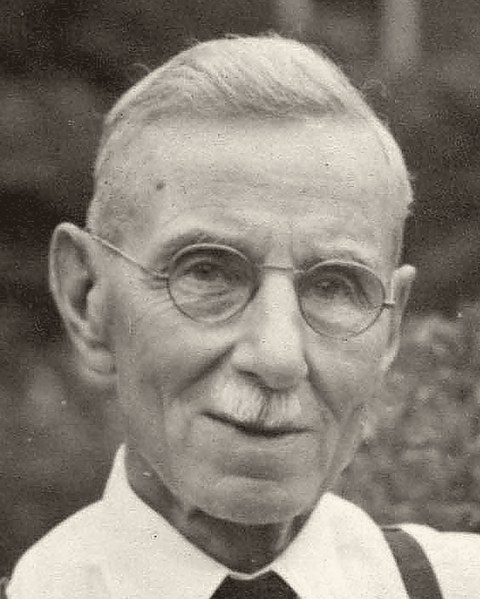
Ernest G. Haines (1871–1961) was born on December 7, 1871, and was converted at nineteen in England, where he met with the assemblies at Bruce Grove Hall and Brook Street Chapel, Tottenham. He came to the United States in 1910, lived in Cincinnati, and from 1918 helped manage the Canonsburg Steel and Iron Works in Pennsylvania until he retired in 1945. He and his wife had three daughters, Mary, Avril and Freda. “Dad Haines” was Mary Lou Engle's grandfather and Kevin Engle's great-grandfather; he went home to the Lord on January 1, 1961, a week after seeing his great-grandchildren from Manila at Christmas. More coming soon: many more of his writings, including his gospel tracts, will be added to the library.
His Thoughts on the Church, five poems he loved, and “With the Lord,” the account of his homegoing on January 1, 1961 and his funeral service, with his own letter read there and words from his grandson Paul Leonard and Ken Engle. The first of his books here; more of his writings are coming.
E. H. Hamilton was an American Southern Presbyterian missionary in China, based at Suchowfu in Kiangsu province, and a friend of Betty Stam's missionary parents. He wrote the poem "Afraid? Of What?" after the martyrdom of his colleague John W. Vinson, and in 1935 wrote Not Worthy to Be Compared, the story of John and Betty Stam and their baby Helen Priscilla.
The young missionary couple martyred in China in 1934, and the 'miracle baby' who survived them.
Robert Edward Harlow, who died in 2003 at the age of 94, was a missionary to the Belgian Congo who returned to Toronto to help found Emmaus Bible School with John Smart and Ernest Tatham in 1941. He later founded Everyday Publications and wrote more than 50 books of plain Bible teaching.
Two short papers: The Complete Thing; Everyday Publications (his own account of the Everyday English books he began in 1964).
A psalm for every day, through all five books of the Psalms. (On plymouthbrethren.org, Book 5 repeats Book 4's text; it appears here once.)
Roy Hill, of Bristol, England, wrote for the assemblies on their life and future. His 2005 article “What is Happening to UK Assemblies?” looks at the decline of assemblies in Britain and calls for pastoral care, sound teaching and personal devotion to Christ; it is published on plymouthbrethren.org.
One paper: What is Happening to UK Assemblies? 2005.
W. J. Hocking (1864–1953) was an English Bible teacher and editor of The Bible Monthly.
One paper: The Cry of the Suffering Christ.
Zane C. Hodges (1932–2008) taught New Testament at Dallas Theological Seminary for many years and wrote widely on the gospel of grace.
Eight studies: our living Lord, repentance, the rich young ruler, dead faith in James 2, problem passages in Paul, and the purpose of tongues.
Frank Holmes wrote Brother Indeed (1956), the first full life of Robert Cleaver Chapman.
The life of Robert Chapman of Barnstaple, "the saintliest man" Spurgeon knew: his conversion, his seventy years in Barnstaple, his travels, and his choice sayings.
William Hoste (1861–1938) was an English Bible teacher and editor of Believer's Magazine.
One paper: The Effects of the Atonement of Christ.
Steve Hulshizer writes on assembly life and Christian living.
Eighty-two short articles on assembly life and Christian living: leadership and shepherding, worship, giving, prayer, Bible versions, and standing firm in a changing culture.
J. H. Hutchison wrote devotional papers for the magazine Knowing the Scriptures. His article "Conformation or Transformation," first printed there in the March–April 1936 issue, urges believers not to be conformed to this world but transformed, and it is published on plymouthbrethren.org.
One paper: Conformation or Transformation.
Harry A. Ironside (1876–1951) was born in Toronto and came to Christ as a boy. He preached first with the Salvation Army, then for many years among the assemblies known as Brethren, and from 1930 to 1948 was pastor of the Moody Memorial Church in Chicago. He preached and wrote across North America and beyond, and his expository books on nearly every book of the Bible are still read today. He went home to the Lord in New Zealand in 1951.
Serving and waiting for God's Son from heaven: Ironside on Paul's letters to the Thessalonians, with notes by Arno C. Gaebelein.
Chapter-by-chapter exposition of 1 Corinthians, from the cross of Christ to the resurrection and the hope of His coming.
Fourteen studies on Paul's first letter to Timothy: sound doctrine, godly living and order in the house of God.
Paul's last letter: a godly heritage, rightly dividing the Word, and faithfulness in the last days.
Lectures on the Acts of the Apostles, from Pentecost to Paul in Rome.
Sixteen addresses on Joshua and the believer's possession of his inheritance in Christ.
God is light, God is love, God is life: addresses on John's three letters and on Jude's warning against apostasy.
Sixty-eight addresses on John's Gospel, the record of the eternal Word made flesh.
Eighty addresses through Luke's Gospel, the story of the Son of Man who came to seek and to save the lost.
Twenty-two lectures on 2 Corinthians: comfort in affliction, the glory of the new covenant ministry, and strength made perfect in weakness.
Shorter writings: Titus, Philemon, the eternal Sonship of Christ, the Lord's Supper, the ministry of women, poems and hymns, and more.
Short papers on Christian growth, the resurrection life and the hope of the Lord's return.
Notes on Paul's letter to the Colossians and the preeminence of Christ, with introductory notes by Arno C. Gaebelein.
Matthew's Gospel of the King and His kingdom, chapter by chapter.
Daily meditations for every day of the year.
Lectures on Daniel the prophet: the times of the Gentiles, the seventy weeks and God's plan for the ages.
Notes, outlines and poems from the margins of Ironside's own Bible, book by book, introduced by the friend who later owned it.
Lectures on Ephesians: the believer's heavenly blessings, the church as the body of Christ, and the walk worthy of the calling.
Why the believer in Christ can never be lost.
The righteousness of God revealed in Romans, and the liberty of grace defended in Galatians.
Ezekiel's visions of the glory of God, Israel's judgment and restoration, and the temple to come.
Practical faith in James and the pilgrim's hope in Peter's letters.
The history between Malachi and Matthew, and how it fulfilled Daniel's prophecies.
How a believer may know he is saved, answered from the Word of God.
The church age as the gap between Daniel's sixty-ninth and seventieth weeks.
Regeneration, redemption, justification, sanctification and other great words of the gospel, explained simply.
Ironside's account of the assemblies known as Brethren, from their beginnings through the divisions that followed.
Ironside's own story of seeking perfection, and what Scripture teaches about true holiness.
Stories and illustrations Ironside used to make Bible truth plain.
Notes on the opening chapters of Isaiah, with introductory notes by Arno C. Gaebelein.
Jeremiah, the weeping prophet: his call, the potter's house, the seventy years' captivity and the fall of Jerusalem, then his lament over the city and the compassion of God.
Twelve messages on the signs of the times, the church, Israel, the Great Tribulation and the coming kingdom.
© 1940 Zondervan
Sixteen lectures on Colossians: the fullness of Christ and the believer's completeness in Him.
Thirty-nine lectures on Paul's first letter to the Corinthians, given to believers about the order and life of the local church.
The offerings of Leviticus 1-7 and what they show of the person and work of Christ.
Mark's Gospel of the perfect Servant, with introductory notes by Arno C. Gaebelein.
"Behold, the bridegroom cometh": the Lord's return and the awakening it should bring.
The return from captivity, the rebuilding of the walls, and God's unseen care for His people in Esther.
Christ our life, our pattern, our object and our strength: short studies through Philippians.
Hosea to Malachi: the twelve prophets and their message for every age.
Gospel addresses: salvation by grace or by works, and nothing in between.
Ironside's notes on Philippians, with introductory notes by Arno C. Gaebelein.
Notes on the book of Proverbs, chapter by chapter: wisdom for daily life.
Ironside's own stories from half a century of preaching the gospel.
Lectures on the book of Revelation and the things that must shortly come to pass.
Paul's voyage and shipwreck in Acts 27 as a picture of the Christian life.
The Song of Songs as a picture of the love between Christ and His own.
The better things of Hebrews: Christ greater than angels, Moses and Aaron, and the once-for-all sacrifice.
Psalms 1-41 and the Christ revealed in them.
Ironside's travel notes from Egypt and Palestine and how the land lights up the Scriptures.
A study of repentance: what it is, why it is necessary, and how it bears fruit.
Ironside answers 362 questions readers sent him, on doctrine, Christian living, the church and prophecy.
© 1944 Zondervan
A warning against misusing dispensational truth, and a plea to rightly divide the Word.
F. C. Jennings was a Bible teacher among the Brethren whose expositions of Isaiah, Ecclesiastes and the letters to the seven churches were widely read.
Two short papers: Recognizing the Devil's Work Among Men, and When the Lord Commends Hatred.
An exposition of Ecclesiastes: life under the sun and its answer in Christ.
Jennings's full exposition of Isaiah, all sixty-six chapters.
The opening vision of Revelation 1 as the introduction to the letters to the seven churches.
Harold St. John (1876–1957) was an English Bible teacher among the assemblies, known as a gifted expositor and traveling preacher.
One paper: The Camp of the Saints.
Dr. S. Lewis Johnson (1915–2004) taught for many years at Dallas Theological Seminary and was a Bible teacher at Believers Chapel in Dallas, Texas. Many of his messages are at believerschapeldallas.org.
Fifty-four articles: the birth of Christ, Israel and the divine purpose (seven parts), the miracles, divorce, church discipline, the Lord's Supper, and the resurrection.
Douglas Jones is the author behind “Unquenching the Spirit,” a short piece drawn from Patriarch magazine (1996) that sets out, point by point from Scripture, the reasons he felt he had to leave the charismatic movement. It is published on plymouthbrethren.org.
One paper: Unquenching the Spirit.
Adoniram Judson (1788–1850), pioneer missionary to Burma, was the son of a Congregational minister and graduated first in his class from Brown University. He helped form the American Board of Commissioners for Foreign Missions in 1810, sailed east with his wife Ann in 1812, and spent nearly forty years in Burma, where he translated the whole Bible into Burmese and compiled a Burmese dictionary. His life is told in Francis Wayland's two-volume Memoir and in The Life of Adoniram Judson by his son Edward, both in this library.
Judson's letter from Burma to young men considering missionary life, with a year-by-year chronology of his life from 1788 to 1850.
Edward Judson (1844–1914), son of Adoniram and Sarah Boardman Judson, was born in Maulmain, Burma. He became a Baptist pastor in New York City, where he built the Judson Memorial Church in Washington Square in his father's memory. His Life of Adoniram Judson appeared in 1883.
The life of Adoniram Judson told by his son: Burma, Ava and Oung-pen-la, Maulmain, his three marriages, and the fruit of his labors, with Judson's own record of dates and his first tract.
Hugh Kane was a Baptist pastor in New York State for eighteen years before leaving his salaried ministry to gather simply to the Lord's name and trust God alone for his needs. In 'A Return to First Principles: Seven Reasons Why' he explains from Scripture why he made that step; the booklet is published on plymouthbrethren.org.
One paper: A Return to First Principles - Seven Reasons Why.
W. Phillip Keller (1920–1997) grew up in East Africa, the son of missionaries, and worked as an agrologist and sheep rancher in Canada before becoming a lay preacher and writer. His best-known book is A Shepherd Looks at Psalm 23.
One paper: The Shepherd and His Staff, on Psalm 23:4. (On plymouthbrethren.org it is filed under Phil Clarkson; the same text is credited elsewhere to Phillip Keller, and its memories of shepherds in Africa and the Middle East are his.)
Christopher Knapp was born on June 6, 1870, to German immigrant parents near Albany, New York. At nineteen he went to South Bend, Indiana, to study for the Presbyterian ministry, and there, through a friend at the YMCA, came to know the Lord Jesus as his Saviour. He became a Bible teacher and writer among the assemblies.
Short studies of every king of Judah and Israel, from Rehoboam and Jeroboam to the captivities, with a chronological table and an introduction by H. A. Ironside.
Samuel's life from Hannah's prayer to his death: the prophet, judge and intercessor in Israel's change from judges to kings.
Carl Knott (born 1951) is an American Bible teacher and missionary, a former Air Force pilot from North Carolina who was saved in 1975. After working alongside William MacDonald, he was commended in 1986 to missionary work in Spain, where he and his wife Ruth serve near Seville and he runs a free literature ministry.
Five articles: pleasing God, saving grace and serving grace, the Christian family, triple security, and more.
Stewart Lavery wrote gospel and Bible-study papers for the assemblies’ magazine Food for the Flock. His articles “The Evangelist and the Ethiopian” (1968) and “The Meaning of The Message,” on John 3:16, are published on plymouthbrethren.org.
Two papers: The Evangelist and the Ethiopian; The Meaning of The Message.
Robert Lee wrote devotional ministry from the Old Testament prophets. His meditation 'Is the Lord a Wilderness to You?', on the searching questions of Jeremiah 2, was included in the anthology What a Friend We Have in Jesus, edited by J. B. Nicholson, and is published on plymouthbrethren.org.
One paper: Is the Lord a Wilderness to You?
Rudy F. Ponce de Leon (born 1939), known to many as Kuya Rudy, wrote Thinking of Jesus in the Breaking of Bread, sample devotionals to help believers remember the Lord at His Supper. He is part of the Engle family's story in the series Lord, Give Us This Mountain.
Nineteen sample devotionals for the Breaking of Bread, with reminders for those who share and suggested announcements for guests.
William Lincoln (1825–1888) was an evangelical clergyman of the Church of England and minister of Beresford Chapel, Walworth, in south London. In 1862 he left the Church of England, and the congregation continued with him as an assembly gathered to the Lord's name alone. He was much valued as a Bible teacher, and his lectures on the epistles and on the church were widely read.
One shorter piece: The Great Tribulation. (The Epistle to Titus on his page is H. A. Ironside's, and is read in Articles by H. A. Ironside.)
Thirteen papers on the church's calling and hope, the assembly of God and its ground of gathering, separation, Babylon, clerisy, the church's decline, and the plain path.
An introduction, four chapters and a summary of Philippians: joy, the mind of Christ, and pressing toward the mark.
Lectures on the First, Second and Third Epistles of John: fellowship with the Father and the Son, walking in the light, love, and the truth.
Four lectures through Colossians, on the fulness of Christ as Head, with an appendix.
Six lectures through Ephesians: the believer's blessings in Christ, the one body, and the walk and warfare of the saints.
Lectures on both letters to the Thessalonians and the Lord's coming, with an appendix.
Lectures through both of Peter's epistles, chapter by chapter: suffering and glory, holy living, and the coming day of the Lord.
Chapter-by-chapter lectures on Hebrews: Christ greater than angels, Moses and Aaron, the new covenant, faith and endurance.
The Lord's ways with Adam, Enoch, Noah, Abraham and Isaac, read as pictures of Christ and the believer.
Robert J. Little was the author of Here's Your Answer (Moody Press, 1967), a book giving Bible-based answers to questions Christians ask. His short answers on subjects such as capital punishment and whether dancing is a sin are adapted from that book and published on plymouthbrethren.org by permission.
Two papers: Capital Punishment; Is Dancing a Sin?
Paul E. Little (1928–1975) was an American evangelist with InterVarsity Christian Fellowship, author of Know Why You Believe and How to Give Away Your Faith.
One paper: The Effective Ambassador.
Peter Lueling prepared the Disciple's Manual Study Guide, a workbook of questions for personal or group study of William MacDonald's book The Disciple's Manual. It was written to help believers put MacDonald's teaching on discipleship and assembly life into daily practice.
A 57-lesson workbook with questions for personal or group study of William MacDonald's The Disciple's Manual: discipleship, character, Christian life and service.
© Peter Lueling
William MacDonald (1917–2007) was a Bible teacher and author of 84 books, among them the Believer's Bible Commentary and True Discipleship. He taught at Emmaus Bible School and was its president from 1959 to 1965, then taught in the Discipleship Intern Training Program in San Leandro, California, from 1973 to 1996. In 1950 he gave Ken Engle a card of churches to visit about his vision for the Philippines, and later invited him to teach at Emmaus. More on William MacDonald, Jean Gibson and the DITP in Lord, Give Us This Mountain
Sixty-two shorter writings on discipleship, worship, the assemblies, prayer, the world and the Christian life.
© William MacDonald
MacDonald's classic study of the church as the body of Christ and the local assembly: its headship, elders, discipline, worship and service.
© William MacDonald
MacDonald's survey commentary on the five books of Moses.
© 1981 William MacDonald
A full year of daily readings, one short devotional for every day from January to December.
© William MacDonald
John MacPherson wrote devotional verse for the Lord's people. His poems 'He Is Worthy', based on Revelation 5:11–12 and written for the remembrance of the Lord at His supper, and 'Precious Moments', which looks forward to the Lord's coming, are published on plymouthbrethren.org.
Two papers: He Is Worthy; Precious Moments.
Alfred Mace (1854–1944) was an English evangelist and Bible teacher among the Brethren, born in Norwich, who in his early years worked alongside men such as J. N. Darby, William Kelly and C. H. Mackintosh. He later travelled widely through the English-speaking world, and his Addresses, given in Toronto in 1942 for young believers, were published by Loizeaux Brothers.
Ten addresses: the three calls of Peter, the forgiveness of sins, the resurrection of the body, God manifested in the flesh, the Bridegroom with you, and more.
Harold G. Mackay (1907–1993) was a Canadian-born evangelist and Bible teacher among the assemblies, from Galt, Ontario. From 1928 he pioneered gospel work in North Carolina and West Virginia, settling in the Greensboro area, where he preached widely, spoke on radio and wrote Assembly Distinctives.
Two papers: A Plea For Leadership; Discipleship and its Dangers in the Last Days.
Charles Henry Mackintosh (1820–1896) was born in County Wicklow, Ireland. After a time in business in Limerick he opened a school at Westport, then gave it up in 1853 to give himself to preaching and writing. He was active in the Irish Revival of 1859–60 and for some forty years edited the magazine Things New and Old. He is best known for his Notes on the Pentateuch and his Miscellaneous Writings, read by Christians of many backgrounds.
Forty-one shorter papers: God in everything, how to study Scripture, living by faith, inside the veil and outside the camp, Nicodemus, Jonathan, Epaphras, the dew of Hermon, the sin offering, one-sided theology, and more.
The all-sufficiency of Christ, discipleship in an evil day, forgiveness, regeneration, sanctification, final perseverance, the Christian priesthood, Gideon, Job and his friends, and the unequal yoke.
The assembly of God, the Lord's Supper, Gilgal, prayer, the Sabbath and the law, the man of God, "thou and thy house," decision for Christ, and Now and Then.
Conversion, a word to the evangelist, papers on the Lord's coming, waiting for the Son, and the life and lessons of Simon Peter. Plymouthbrethren.org has this volume only in part.
The call of God to Abraham and Lot, the life and times of David and of Josiah, and the history of the tribe of Levi.
The Great Commission, the life and times of Elijah, glad tidings, and the ministry of reconciliation.
Alexander Marshall (1846–1928) was a Scottish evangelist among the assemblies, whose booklet God's Way of Salvation has been printed in millions of copies.
One paper: God's Way of Salvation.
Jim McCarthy grew up in San Francisco in a devout Roman Catholic family that had come from Ireland. He and his wife Jean came to Christ in their early twenties through a home Bible study. In 1981 he helped found Good News for Catholics to bring the gospel to Catholic people. He produced the video Catholicism: Crisis of Faith and wrote The Gospel According to Rome, Letters Between a Catholic and an Evangelical, and What You Need to Know About Roman Catholicism. He knew William MacDonald well, and his portrait of him is in the articles here.
Give Me the Works, Father; The Mass: From Mystery to Meaning; Is Bigger Really Better?; and his warm portrait of William MacDonald, A Visit to Bill MacDonald’s Apartment.
The annotated transcript of his video documentary, with more than eighty footnotes, in which former Catholics, priests and nuns among them, tell how they came to trust Christ alone.
© 1991 James G. McCarthy
William J. McClure (1857–1941) was an Irish-born evangelist and Bible teacher among the assemblies, from County Down, who was awakened to his need of Christ during the 1874 revival. He preached for many years in Canada and the United States and travelled to South Africa, New Zealand and Australia; his Lectures on the Tabernacle, given in America, Australia and Belfast, were published by John Ritchie.
Twenty lectures on the tabernacle, from the gate of the court and the brazen altar to the ark, with their lessons of Christ.
Jim McKendrick writes short articles on Christian growth, books and the life of the assembly.
Thirty-five short articles: books that help believers grow, systematic theology, eternal security, prayer, revival, hymnbooks, and the pursuit of godliness.
William J. McRae was a Canadian Bible teacher, born and raised in Toronto, who trained at Emmaus Bible School and Dallas Theological Seminary. After years as a school teacher and in pastoral and teaching ministry, including Believers Chapel in Dallas from 1966 to 1975, he served as president of Ontario Bible College and Ontario Theological Seminary from 1983 to 1991.
Five articles: Christian camping, the meeting of the church, and The Challenge of the 70's.
Frederick Brotherton Meyer (1847–1929) was a London-born Baptist pastor, Bible teacher, evangelist and author. His friendship with D. L. Moody, begun at Priory Street Chapel in York, shaped his ministry. At Christ Church, London, his congregation grew from about 100 to over 2,000, and he later preached at conferences and on missions around the world. His motto was, “Make the most of me that can be made for Thy glory.”
Short addresses on the surrendered, Spirit-filled life that God intends for every believer.
Meyer traces the prophet's life chapter by chapter and draws out the source of his strength with God.
A short message on 1 Peter 2:20: suffering wrong patiently, as Christ did, is acceptable with God.
Thirty-five chapters on the Epistle to the Hebrews: the glory of Christ, His priesthood and sacrifice, the anchor of the soul, and the life of faith.
F. V. Mildred wrote devotional papers on the Christian life. The article 'Heart Cry' looks at prayer as the deepest instinct of the human soul and at the Lord Jesus, who lived on earth in constant touch with the throne of God; it is published on plymouthbrethren.org.
One paper: Heart Cry.
Andrew Miller (1810–1883) was a Scottish-born London businessman and Bible teacher among the Brethren, author of Short Papers on Church History.
Three papers: the last chapter of his Short Papers on Church History, The Christian's Place, and The Midnight Cry.
Dwight Lyman Moody (1837–1899), born in Northfield, Massachusetts, was a shoe salesman in Boston and Chicago who became one of the best-known evangelists of the nineteenth century, preaching to great crowds in America and Britain and founding the Moody Bible Institute in Chicago.
Twenty-one of Moody's messages and writings: What must I do to be saved?, Where art thou?, Heaven, repentance, prayer, soul-winning, Bible marking, and anecdotes and illustrations.
Thomas Donald William Muir (1855–1931), born in Ormstown, Quebec, was a pioneer gospel evangelist among the assemblies. He was converted in Hamilton, Ontario, in 1874 and moved to Detroit in 1880. In 56 years of evangelism he labored throughout Michigan, where a tent work in Detroit's Corktown grew into Central Gospel Hall.
One paper: The Power of God.
George Müller (1805–1898) cared for more than ten thousand orphans in Bristol, trusting God alone in prayer for every need.
Two papers: Believing God Day by Day; The Word of God and Prayer.
Dr. James T. Naismith of Toronto was a Bible teacher among the assemblies and a friend of James Gunn, at whose funeral he spoke in 1982.
Fifty articles: personalities in Genesis from Adam to Joseph, a series on Christ, encouragement from God, the Son, the Spirit and the saints, and Christian answers on abortion, euthanasia and suicide.
Thomas Newberry (1811–1901) was an English Bible scholar best known for The Englishman's Bible.
Two papers: The Glory of God, and Types of the Temple.
The tabernacle, its oil, curtains, boards, vessels and priesthood as types of Christ.
William Reed Newell (1868–1956), once assistant superintendent of Moody Bible Institute, was an author, Bible teacher and evangelist. D. L. Moody appointed him to teach weekly Bible classes in Chicago, Detroit, Toronto and St. Louis, where he grounded many believers in the gospel of grace. He also wrote the hymn "At Calvary."
Two shorter pieces: Paul's Gospel, and The Spiritual Order of Paul's Epistles.
Newell's commentary on the whole Book of Revelation.
Newell's classic verse-by-verse exposition of Romans, grounding believers in the gospel of grace.
Paul Parmer writes for young believers and campers. His story "Overcoming that 'After Camp Spiritual Dive,'" about keeping close to the Lord in the months after a summer at Bible camp, is published on plymouthbrethren.org by permission of the author.
One paper: Overcoming that "After Camp Spiritual Dive.
Mark Peever is a Christian writer who has been influenced by the early Brethren writers. His "Summary of Some of the 'Chief Men' among the Brethren," published on plymouthbrethren.org, gives short sketches of J. N. Darby, J. B. Stoney, William Kelly, J. G. Bellett and others, with suggestions of their writings to read.
One paper: Summary of some of the "Chief Men" among the brethren.
William J. Pell wrote Bible study outlines for believers. His study "Water in the Wilderness," published on plymouthbrethren.org, traces Israel's journey from Shur and Marah to the wells of Elim as pictures of God's provision for His people.
One paper: Water in the Wilderness.
Peter J. Pell Jr. prepared weekly Bible class lessons for young believers, published by Gospel Folio Press.
Weekly class lessons through the Epistle to the Hebrews, with questions for study.
Fifty-two weekly lessons through Romans, prepared for young believers, each with questions for study.
J. Dwight Pentecost (1915–2014) was an American theologian at Dallas Theological Seminary, author of Things to Come.
One paper: The Doctrine of Imminence.
Henry Pickering (1858–1941) was a Scottish publisher and editor of The Witness, and author of Chief Men Among the Brethren.
One paper: Which One is the Heathen?
Arthur Tappan Pierson (1837–1911) was an American pastor, missionary statesman and author, and the authorized biographer of George Müller.
An Important Lesson in the School of Prayer.
The authorized life of George Müller, whose orphan homes in Bristol were supported by prayer and faith alone.
George Pinches wrote devotional ministry on the Christian life. His paper "Contemplation of Self or of Christ," published on plymouthbrethren.org, teaches that joyful Christian living comes from a simple faith fixed on the Lord Jesus rather than from looking at oneself.
One paper: Contemplation of Self or of Christ.
Les Rainey is a Bible teacher and former missionary who studied at Dallas Theological Seminary and returned from the mission field in 1994. He has written study courses, commentaries and messages, gathered in The Collected Writings of Les Rainey. His article "He Is Thy Lord, Worship Thou Him" first appeared in Milk & Honey.
One paper: He is Thy Lord, Worship Thou Him.
W. Ross Rainey was born in Brooklyn, New York, and was saved at the age of eight. He graduated from The Stony Brook School, Stetson University and Dallas Theological Seminary, and was commended to the Lord's work in North America in 1954. He served in evangelism, Bible teaching, conferences and pastoral ministry, taught as a visiting instructor at Emmaus Bible School and Kawartha Lakes Bible School, and edited Food for the Flock for fifteen years. In 1970 he moved with his wife Lillian and their three children from St. Louis to Plymouth, Michigan, and ministered across the United States and Canada, with a ministry trip to India in 1988–89. His books include Capsule Comments on the Cults, Portraits from Paul's Pen and The Life of Joseph.
Rainey's account, in three parts, of a two-week visit to three Bible lands, most of it spent in Israel.
Thirty-six articles: Bible characters such as Enoch, Jabez, Epaphras and Lydia, the miracles of Christ, prayer, giving, temptation, God's will, soul-winning, prophecy, and a diary of ministry in Kerala, India.
The mode, meaning and practice of believer's baptism, with a look at the New Testament passages most often raised about it.
Two messages on what God gives along the way when His people pray, beginning with every need supplied.
Seven portraits from 2 Timothy 2: the Christian as a son, a soldier, an athlete, a farmer, a student, a vessel and a servant.
George Rainey (1898–1987) was born in Ballymena, Ireland, and saved in Brantford, Ontario, in 1912. Commended by the Brantford assembly, he served in China from 1921 until his wife Ruth's illness brought them home in 1925, and he spent the rest of his life ministering among the assemblies of North America, especially in small and remote places. His son W. Ross Rainey edited the magazine where several of his articles appeared.
Four papers: Christ our only hope, pearls from the Psalms, the two memorials of Joshua 4, and workers wanted for God.
Alexander Raleigh (1817–1880) was a Scottish Congregational minister, born near Castle Douglas in Galloway, who served churches in Greenock, Rotherham and Glasgow before long pastorates at Canonbury and Kensington in London. He twice led the Congregational Union of England and Wales and published several volumes of sermons; his meditation on Psalm 119:19, 'I Am a Stranger on the Earth', is published on plymouthbrethren.org.
One paper: I Am A Stranger On The Earth.
John Rankin was an evangelist and Bible teacher among the assemblies who served the Lord for years in the British West Indies and later ministered throughout the United States and Canada. His papers “Diotrephes” and “Spiritual Laughter” appeared in the magazine Food for the Flock.
Two papers: Diotrephes; Spiritual Laughter.
Samuel Ridout (1855–1930) was born in Annapolis, Maryland, and raised by his grandfather. After graduating from St. John's College and serving at sea, he gave himself to Bible teaching and writing among the assemblies in America.
Seven papers: remembering F. W. Grant, promises to the overcomer, second-generation Christians, the Lord's Supper, the gift of teaching, the washing of feet, and shepherds for the sheep.
Short studies on how each Gospel and the rest of Scripture present the person of Christ.
John Ritchie (1853–1930) of Kilmarnock, Scotland, was an evangelist, Bible teacher and publisher whose books and gospel tracts went around the world.
Seven papers: assurance, conversion, redemption, the new birth, the basis of fellowship, the second coming, and what church to join.
A. C. Rose wrote devotional ministry for the assemblies on the worship and prayer life of the believer. His meditation "Positions and Conditions in Prayer," which draws on David's example and quotes J. N. Darby's translation, is published on plymouthbrethren.org.
One paper: Positions and Conditions in Prayer.
Charles W. Ross wrote on Bible prophecy, including a long series on the times of the Gentiles.
The Times of the Gentiles, a twenty-part study of prophecy, with a paper on spiritual abominations.
H. L. Rossier (1835–1928) was a Swiss Bible teacher among the assemblies of French-speaking Switzerland. His meditations on the historical books of the Old Testament were written in French and translated into English.
Joshua chapter by chapter: crossing Jordan, Gilgal, the conquest and possession of the land as a picture of the believer's heavenly blessings.
The return from captivity, the altar and the temple rebuilt, opposition, and Ezra's work of the Word.
Thirty-two meditations through Judges: Israel's decline, God's deliverers from Othniel to Samson, and the lessons for His people today.
Five meditations on Ruth, Naomi and Boaz, the kinsman-redeemer.
John Charles Ryle (1816–1900) was the first Anglican Bishop of Liverpool and a much-loved evangelical writer, known for Holiness and Expository Thoughts on the Gospels.
Nine papers by Bishop Ryle, including his long studies on the inspiration of the Bible.
Charles C. Ryrie (1925–2016) taught at Dallas Theological Seminary and edited the Ryrie Study Bible.
Two papers: Assembly Leadership; Resurrection Power.
Adolph Saphir (1831–1891) was a Hungarian-born Jewish Christian preacher and author in London.
One paper: The Open Secret.
Vernon Schlief (born 1911) grew up in North Dakota and Minnesota and was saved in 1924. In 1942 he left his post with Swift & Co. in Milwaukee and moved to New Orleans with his wife Gladys, living by faith, to open a Christian servicemen's center. Over fifty years they helped plant assemblies across the Deep South, including Belle Chasse, Louisiana, as he tells in Our Great Adventure in Faith (1996).
Vernon Schlief's own story of a life of faith: his conversion, marriage, gospel work among servicemen and prisoners, and God's provision.
Dr. A. T. Schofield (1846–1929) was a London physician and Christian writer.
Christian Agnostics.
Walter Scott (1838–1933) was a Scottish Bible teacher among the Brethren, known for his exposition of Revelation.
Four short papers: Be Still and Know That I Am God, counsels and directions for young Christians, and notes for the new year.
Michael Scotto, of Greensboro, North Carolina, was raised and served for twenty-five years in the Roman Catholic Church before trusting Christ in 1991. In his article “Be Not Deceived,” published on plymouthbrethren.org, he tells his story and answers the claim that a devout Catholic needs no conversion.
One paper: Be Not Deceived.
Leonard Sheldrake (1885–1952) was born in England and lost both parents to tuberculosis as a boy. Though he preached as a Sunday School superintendent, he long lacked any certainty of salvation until he came to rest on Christ alone. He became a beloved Bible teacher whose writings center on the glories of the Lord Jesus.
The renown of the Lord Jesus in His birth, words, works, lowliness, ways, death, burial, resurrection and glory.
The tabernacle and its furniture as pictures of Christ and His work.
Andrew Shelor wrote short devotional papers on the Christian's hope and on God's loving discipline. His articles 'Hasting Unto What?', on looking for the Day of God in 2 Peter 3, and 'Love Behind Chastening', drawn from Hebrews 12, are published on plymouthbrethren.org.
Two papers: Hasting Unto What?; Love Behind Chastening.
A. T. Sherman was a writer from the United Kingdom whose devotional article “Learning to Love,” a meditation on Mary of Bethany sitting at the feet of Jesus, first appeared in the assemblies’ magazine Precious Seed. It is published on plymouthbrethren.org.
One paper: Learning to Love.
Sadhu Sundar Singh (1889–c. 1929) was an Indian Christian evangelist, born into a Sikh family in Punjab, who came to Christ as a teenager and chose the saffron robe of a sadhu to carry the Gospel across India and into Tibet. He also spoke widely abroad, and was last seen in 1929 setting out for Tibet; At the Master's Feet was published in 1922.
Devotional conversations between the Master and His disciple from the famous Indian Christian evangelist.
Dr. Mahendra P. Singhal was raised in an orthodox Hindu home in India and earned master's degrees in mathematics and education. While teaching mathematics at a Christian boarding school in Mussoorie, he trusted Christ on 16 July 1963, after talks with Major Ian Thomas of the Torchbearers; his family disowned him. He became chairman of Hinduism International Ministries, based in Zion, Illinois.
A video of Dr. Mahendra Singhal's testimony: from an orthodox Hindu home in India to faith in Christ.
George Smith (1833–1919) was a Scottish journalist and missionary historian, born in Leith, who edited the Friend of India and was India correspondent of The Times. Returning to Scotland, he became foreign mission secretary of the Free Church of Scotland and wrote many missionary biographies, including his Life of William Carey.
The full biography of the father of modern missions and his work at Serampore, India.
Daniel Smith of Vancouver, British Columbia, wrote several volumes of meditations on the Lord's Supper under the title Worship and Remembrance.
Fifty-one short meditations on the Lord Jesus and His sacrifice, written to help believers worship at the Lord's Supper.
Fifty-one more meditations for the Lord's Supper on the person and work of Christ.
Sixty-one meditations for the Lord's Supper, including The Great God Our Saviour.
James Smith wrote outline studies from the Old Testament for preachers and Bible students. His papers 'Pharaoh: A Type of the Devil', on Pharaoh's compromises in Exodus, and 'The Holy War', on Israel's battle with Amalek in Exodus 17, are published on plymouthbrethren.org.
Two papers: Pharaoh: A Type Of The Devil; The Holy War.
W. G. Smith wrote practical ministry for believers in the assemblies. His "Suggestions to Saints," twenty brief counsels for those who gather in the Lord's name for the breaking of bread, is published on plymouthbrethren.org.
One paper: Suggestions to Saints.
Hamilton Smith (1862–1943) was an English Bible teacher and writer among the Brethren.
One paper: The Sons of the Prophets.
Dan Snaddon (1915–2009), known to many as “Brother Dan,” grew up in Scotland and was a prisoner of war in Singapore in World War II, a story he tells in Through the Valley of the Shadow. For more than fifty years he preached and taught across Canada and the United States. The studies here come from his own ministry notes.
Dan Snaddon's studies on the life of Abraham, the friend of God.
Dan Snaddon's Bible studies in the book of Acts.
Dan Snaddon's Bible studies in the book of Daniel.
Dan Snaddon's Bible studies in the book of Esther.
Dan Snaddon's Bible studies in the book of Ezra.
Dan Snaddon's Bible studies in the book of Genesis.
Dan Snaddon's Bible studies in the book of Jonah.
Dan Snaddon's Bible studies in the book of Joshua.
Dan Snaddon's Bible studies in the book of Nehemiah.
Dan Snaddon's Bible studies in the book of Revelation.
Dan Snaddon's Bible studies in the book of Ruth.
Snaddon's sermon notes on the person of Christ, the offerings, prayer, the Lord's Supper, the New Testament assembly and the Christian home.
Studies on what Scripture teaches about the church and its gatherings.
Single messages from Dan Snaddon's ministry on the Christian life, the church, prophecy, the person of Christ and more.
Messages on questions facing believers and assemblies.
Messages from Dan Snaddon's later ministry.
Studies tracing Israel's journey from Egypt to Canaan, and its lessons for the believer today.
Dan Snaddon's Bible studies in the Epistle to the Romans.
Dan Snaddon's Bible studies in the Gospel of John.
Dan Snaddon's Bible studies in the Gospel of Luke.
Dan Snaddon's Bible studies in the Gospel of Matthew.
Studies on the person and work of the Holy Spirit.
Dan Snaddon's studies in Isaiah 53, the prophecy of the suffering Servant.
Lessons on the church: its nature, order and life.
A survey of the books of the New Testament, one by one.
Studies on the original manuscripts and the trustworthiness of the Bible text.
Dan Snaddon's studies in the parables of the Lord Jesus.
Messages on prayer and revival.
Messages for the seasons of the Christian year.
Dan Snaddon's Bible studies in 1 & 2 Peter.
Dan Snaddon's Bible studies in 1 Corinthians.
Dan Snaddon's Bible studies in 1 John.
Dan Snaddon's Bible studies in 1 Thessalonians.
Dan Snaddon's Bible studies in 1 Timothy.
Dan Snaddon's Bible studies in 2 Corinthians.
Dan Snaddon's Bible studies in 2 Timothy.
Dan Snaddon's Bible studies in Colossians.
Dan Snaddon's Bible studies in Ephesians.
Dan Snaddon's Bible studies in Hebrews.
Dan Snaddon's Bible studies in James.
Studies in Bible prophecy: Israel, Daniel's seventy weeks and the times of the Gentiles.
Dan Snaddon's Bible studies in the Psalms.
Dan Snaddon's studies in the tabernacle and what it shows of Christ.
Dan Snaddon's own story: his boyhood in Scotland, his salvation, and God's care for him as a prisoner of war in Singapore during World War II.
Studies on worship and the Lord's Supper.
The American Tract Society is a nonprofit evangelical publisher founded in New York City on May 11, 1825, to print and distribute gospel tracts and Christian literature. It moved its headquarters to Garland, Texas, in 1978. This one-year chronological Bible reading plan is its suggested way to read the whole Bible through in a year.
A day-by-day plan for reading the whole Bible in one year, in chronological order.
Dr. Edwin G. Spahr served for about thirty years in the Philippines and was one of the best known and best loved evangelical preachers in Manila, where his Sunday morning messages at Grace Bible Church sent many out to live and witness for Christ. Gethsemane to Galilee, written in Manila in 1976, was his response to friends who asked him to put his preaching into writing.
Expository, devotional meditations on Christ's suffering, trial, death and resurrection, from Gethsemane to the risen Lord, written for pastors in the Philippines.
© 1977 O.M.F. Publishers
H. C. Spence wrote devotional ministry centred on the person of Christ. The paper 'The Beauty of the Lord' contrasts the fading beauty of nature and of human life with the lasting beauty of the Lord Jesus, and it is published on plymouthbrethren.org.
One paper: The Beauty of the Lord.
Charles Haddon Spurgeon (1834–1892), the "Prince of Preachers," was pastor of the Metropolitan Tabernacle in London for nearly forty years.
Two papers: A Psalm For Young Persons; The Psalm of the Cross (Psalm 22).
Eighty-two questions and answers, with Scripture proofs, that Spurgeon compiled for the families of his congregation.
James Stalker (1848–1927) was a Scottish preacher and author, known for The Life of Jesus Christ and The Life of St. Paul.
Two papers: A Trophy of Grace; Kicking Against The Goad.
Miles J. Stanford (1914–1999), born in Wheaton, Illinois, was a Christian author and correspondence-ministry leader who served as an Army cartographer in World War II. He later based his ministry in Colorado Springs. Drawing deeply on the early Brethren, especially J. N. Darby, he wrote The Green Letters (1964), later issued by Back to the Bible as Principles of Spiritual Growth.
Brief chapters on time, growth, the cross and the believer's identification with Christ.
Martin Staveley wrote Bible ministry on the person of Christ. His study 'The Greatness of the Lord Jesus Christ' works through Colossians, where Paul answers the early errors that denied Christ's deity by setting out His supremacy over all things; it is published on plymouthbrethren.org.
One paper: The Greatness of the Lord Jesus Christ.
Andrew Stenhouse (1899–1991) was a missionary among the assemblies in Argentina and Chile from 1927 to 1980. His writings include A Scriptural Assembly, True Evangelism and The Sin of Sectarianism; his article “Meeting as a New Testament Church Today” is adapted from A Scriptural Assembly.
One paper: Meeting as a New Testament Church Today.
James Butler Stoney (1814–1897) was an Irish Bible teacher among the early Brethren.
Two papers: Disappointment; The New Place.
C. E. Stuart (1823–1903) was an English Bible teacher among the Brethren.
Vanity of Vanities; All Is Vanity.
The church hid in God, the assembly, body and bride of Christ, the Holy Spirit, the unity of the Spirit, ministry, prayer meetings and more.
Ben Sutton was an evangelist whose testimony, "Then Jesus Came," tells how Christ delivered him from drink and gambling and later sent him preaching across England in a Gospel Caravan. He and his wife Sarah made their home in Portage la Prairie, Manitoba, and his preaching and teaching ministry extended across North America.
One paper: Then Jesus Came.
J. Hudson Taylor (1832–1905) was a British missionary to China and founder of the China Inland Mission, which carried the gospel into every province of China's interior. His own books here include A Retrospect, China: Its Spiritual Need and Claims, and Union and Communion; his life is told in Hudson Taylor in Early Years, The Growth of a Work of God, and Hudson Taylor's Spiritual Secret, all in this library.
Three messages: Blessed Be the Name of the Lord (on Job), Trials and Blessings, and What Doest Thou Here? (1 Kings 19).
The 1865 appeal that launched the China Inland Mission: eighteen provinces, hundreds of millions without Christ, and a call to pray for 'willing, skilful' workers. This is the 1868 third edition.
Hudson Taylor's own account of how God called him, taught him to move men through God by prayer alone, and led him to found the China Inland Mission.
Hudson Taylor on the Nazarite vow, the priestly blessing and the princes' offerings: separation to God, the blessing of God, and service that springs from love.
Hudson Taylor's devotional study of the Song of Solomon as a picture of the believer's union and communion with Christ.
Samuel Taylor wrote Bible ministry for the assemblies' magazine Food for the Flock between 1957 and 1960. His articles 'Gaius and Diotrophes', on the work of elders in 3 John, 'Great David's Greater Son' and 'He Is Risen' are published on plymouthbrethren.org.
Three papers: Gaius and Diotrophes; Great David’s Greater Sin; He is Risen.
Dr. Howard Taylor (1861–1946), Hudson Taylor's son, and his wife Mary Geraldine Taylor (née Guinness, 1865–1949) served with the China Inland Mission. They wrote the authorized two-volume life of Hudson Taylor, The Growth of a Soul (1911) and The Growth of a Work of God (1918), and later the shorter Hudson Taylor's Spiritual Secret.
The second volume of the life of Hudson Taylor: the founding of the China Inland Mission, the Lammermuir party, the 'exchanged life,' and the spread of the gospel into every province of China.
The first volume of the authorized life of J. Hudson Taylor: his boyhood in Barnsley, his conversion, learning to trust God alone, and his first years in China (1832–1860).
The life of the founder of the China Inland Mission and the 'exchanged life' that sustained him.
Herbert Wilbraham Taylor (1847–1899) was an English evangelist and Bible teacher among the Brethren, born at Barnet, who preached the Gospel with power in many large towns and loved open-air preaching in the market places. He wrote many tracts and small Gospel books, including Abraham: Suggestive Thoughts for Young Christians (1877).
One paper: Abraham Had To Wait For His Inheritance.
Friedrich August Tholuck (1799–1877) was a German Protestant theologian and preacher at the University of Halle.
One paper: Doubting, then Believing.
W. H. Griffith Thomas (1861–1924) was an Anglican scholar and author, a founder of Dallas Theological Seminary.
One paper: Becoming Fishers of Men.
Sam Thorpe is a Bible teacher among the assemblies. His studies "Altars of Genesis," which traces worship through the altars of the patriarchs, and "The Humble Walk With God" are published on plymouthbrethren.org.
Two papers: Altars of Genesis; The Humble Walk With God.
Reuben Archer Torrey (1856–1928) was an American evangelist, pastor and Bible teacher, born in Hoboken, New Jersey. He led the Moody Bible Institute, preached in worldwide revival campaigns, served as dean of the Bible Institute of Los Angeles (Biola), and helped edit The Fundamentals.
A practical, Bible-centred guide to the importance, the conditions and the power of prayer.
A. W. Tozer (1897–1963) was an American pastor and author, known for The Pursuit of God and The Knowledge of the Holy.
Two papers: Divisions Are Not Always Bad; Men of God.
William Trotter (1818–1865) was an English Methodist minister who joined the Brethren and wrote widely on prophecy and church order.
One paper: Five Letters on Worship and Ministry in the Spirit.
Ben Tuininga (died 2007) taught at Emmaus Bible School, where he served for a time as co-president with William MacDonald. He helped plant assemblies across the American Midwest, was an elder in several of them, served 15 years as a Minneapolis police chaplain, and was involved with Story Book Lodge Christian Camps for more than half a century.
One paper: What Do You Think?
Papers published on plymouthbrethren.org without a named writer.
212 unsigned papers from plymouthbrethren.org, from A Calendar Comment to the end of the list; where a paper names its writer or source, that line is kept in the text.
Jim Upton wrote for the assemblies on the careful use of Bible words. In his article “Hold Fast... Sound Words,” published on plymouthbrethren.org, he urges believers to speak of “the church” and “the assembly” as Scripture does, rather than borrowing terms like “the chapel.”
One paper: Hold Fast...Sound Words.
W. A. Upton wrote for the assemblies on congregational worship. His article “Singing With Purpose,” published on plymouthbrethren.org, shows from Scripture that singing together has two main purposes, praising God and teaching His people, and encourages believers to take part wholeheartedly.
One paper: Singing With Purpose.
Elliott VanRyn (born 1922 in Marsh Harbour, Abaco, Bahamas), son of August Van Ryn, trusted Christ in 1931, served in the Army Air Force in World War II, ran a tire business with his brother, and from 1961 to 1999 served the Lord in full-time ministry.
Twenty-three devotional articles: looking unto Jesus, trust, true peace, trials, prayer, feeding on the Word, Christ's birth, and His coming.
W. E. Vine (1873–1949) was an English Bible teacher and Greek scholar, best known for his Expository Dictionary of New Testament Words.
Five papers: Christians gathered to the Lord's name, leading in prayer, New Testament churches, the term "the Brethren," and young men and the mission field.
John Walden (1905–1979) of Colorado Springs, Colorado, was saved at six and began preaching at fifteen. For more than thirty years he taught the Colorado Springs city-wide Bible Class, cared for the assemblies in that area, and reached many through radio messages, a cassette lending library and a daily “Minute with the Bible” telephone line. He wrote for the Sunday School Teachers' Lesson Manual from 1949 to 1977, and with his wife Nan began the Christian Home for Children in Colorado Springs.
Thirteen weeks of radio messages on the little book of Jude, published by his wife Nan as the last of seven books of his messages.
Seven short studies on what God gives His people: His love, righteousness, life, peace, wisdom, strength and possessions.
© 1980 Mrs. John Walden
George Walker wrote for Food for the Flock, a magazine of ministry for the assemblies. His article "Escuela Biblica in Miami," from the September 1963 issue, tells how a Spanish-language Sunday school began at a Miami Gospel Hall among Cuban refugee children.
One paper: Escuela Biblica in Miami.
William O. (Bill) Walker was saved while serving in the army and came to Vernon and Gladys Schlief's servicemen's center in New Orleans. After his discharge he turned down a good career to serve there full time, and with his wife Carolyn he helped build assemblies across the South, from Lafayette, Louisiana, to Linden, Alabama. His study of 1 Peter, By the Rivers of Babylon, is published on plymouthbrethren.org.
A short study of Simon Peter the man and his mandate.
John F. Walvoord (1910–2002) was an American theologian and longtime president of Dallas Theological Seminary.
One paper: The Incarnation of the Son of God.
George Watmough was a former professional boxer and show-business hopeful who was converted in 1933 after hearing evangelist Paul Rader on the radio. For some thirty years he hitchhiked across America to share the gospel with the drivers who picked him up. He told those stories in Hitchhiking on Purpose (Loizeaux Brothers, 1965).
Short true stories from a soul winner who crossed North America by thumb, telling every driver who picked him up about the Lord Jesus.
© 1965 Loizeaux Brothers
Joseph Barnes Watson (1884–1955) was an English Bible teacher among the assemblies who grew up in Cumberland and served for over forty years as a customs officer in London while preaching widely. He helped plant the assembly at Leytonstone and from 1941 edited The Witness magazine; his books include The Sinless Saviour.
Two papers: The Church: A Symposium; The Lord's Supper - edited by David Dunlap.
Francis Wayland (1796–1865) was president of Brown University, Judson's own college, from 1827 to 1855, and a Baptist pastor and writer. At the request of the American Baptist Missionary Union and of Judson's family he wrote the two-volume Memoir (1853), drawn from Judson's letters and journals.
The standard life of Judson, written from his own letters and journals: his youth, conversion and call, the voyage to India, Rangoon, and the long imprisonment at Ava (1788–1834).
Judson's later years: preaching among the Karens, completing the Burmese Bible, his advice to missionary candidates, his visit to America, and his death at sea in 1850.
G. Christian Weiss (George Christian Weiss, born 1910) wrote for the Back to the Bible broadcast in Lincoln, Nebraska, and authored more than thirty books. Many of them are on missions, such as The Heart of Missionary Theology (1976), along with Insights into Bible Times and Customs (1974). His article on waiting on God in worship was published by Back to the Bible.
One paper: Worship - Waiting on God.
Warren W. Wiersbe (1929–2019) was an American pastor of Moody Church and Bible teacher on Back to the Bible.
One paper: Doctrine is Important.
George Vicesimus Wigram (1805–1879) was an early leader among the Brethren in England, who compiled the Englishman's Hebrew and Greek concordances.
One paper: Watching and Praying.
Joe Wilbur writes on the life and health of the local assembly. His article "Illness of the Assembly," which compares the local church to a living body that must be taught and nourished to reach maturity, is published on plymouthbrethren.org.
One paper: Illness of the Assembly.
George Christopher Willis (1889–1973) was a Canadian missionary among the assemblies who served in China from 1921 to 1949. He wrote many books of Bible meditations, published the paper The Steward, abridged Andrew Miller's history of the Brethren, and described his internment by the Japanese in I Was Among the Captives.
Two papers: Endurance; Paul's Ambitions.
T. Ernest Wilson grew up in Belfast, Northern Ireland. At eighteen he heard missionaries speak of Angola's great need, and in 1923, at twenty-one, he was commended by a small working-class assembly in Belfast to the Lord's work in Africa, where he served for many years; his account is told in Angola Beloved. He later taught the Word widely in North America and beyond, including the All-India Assembly Workers' Conference in 1973, and lived in Sea Girt, New Jersey. He was a lifelong friend of James Gunn and spoke at his funeral in 1982. More of his ministry is at ternestwilson.com.
Wilson's own account of his missionary years in Angola: the call he received as a young man in Belfast, the hardships and joys of pioneer work, and God's faithful supply.
Thirteen articles: addressing God in prayer and worship, collective and individual prayer, assembly finances, discipline, the ministry of women, the church in the pastoral epistles, Moses in God's school, and who the 'brethren' are.
The Lord's Upper Room ministry in John 13–17, first given as addresses to over two hundred workers at the All-India Assembly Workers' Conference in Madras in 1973.
The New Testament 'mysteries': the faith, the gospel, Jew and Gentile in one body, the bride, godliness, the kingdom, Israel's blindness, the rapture, God's will, and Babylon.
Noah and Ararat, Abraham and Moriah, Moses and Sinai, Caleb and Hebron, David and Zion, Elijah and Carmel, then Christ on the seven mountains of Matthew's Gospel.
The psalms that speak of the Lord Jesus, from Psalm 2 and Psalm 40 onward: His glories, sufferings, resurrection and coming reign, with outlines of each psalm.
Lester Wilson was a Canadian-born evangelist who was called in the 1930s to pioneer gospel work in North Carolina. A five-week campaign in Clayton in 1931 saw fifty-one people profess faith in Christ, and he went on to help plant assemblies in Raleigh, Burlington, Winston-Salem, Siler City, Greensboro and Durham. He spent his last years at Pittsboro Christian Village in North Carolina.
One paper: Backsliding and Restoration.
J. David Wilt wrote from Harrisburg, Pennsylvania, on Christian family life. His article "Godly Wives," which traces four marks of a godly wife through four passages of Scripture, beginning with the Spirit-filled life of Ephesians 5, is published on plymouthbrethren.org.
One paper: Godly Wives.
W. T. P. Wolston (1840–1917) was a Scottish physician and evangelist among the Brethren, much used in gospel preaching and writing.
Four addresses: Behold the Bridegroom, Daniel 1, Ezekiel's forty days, and the house of God.